
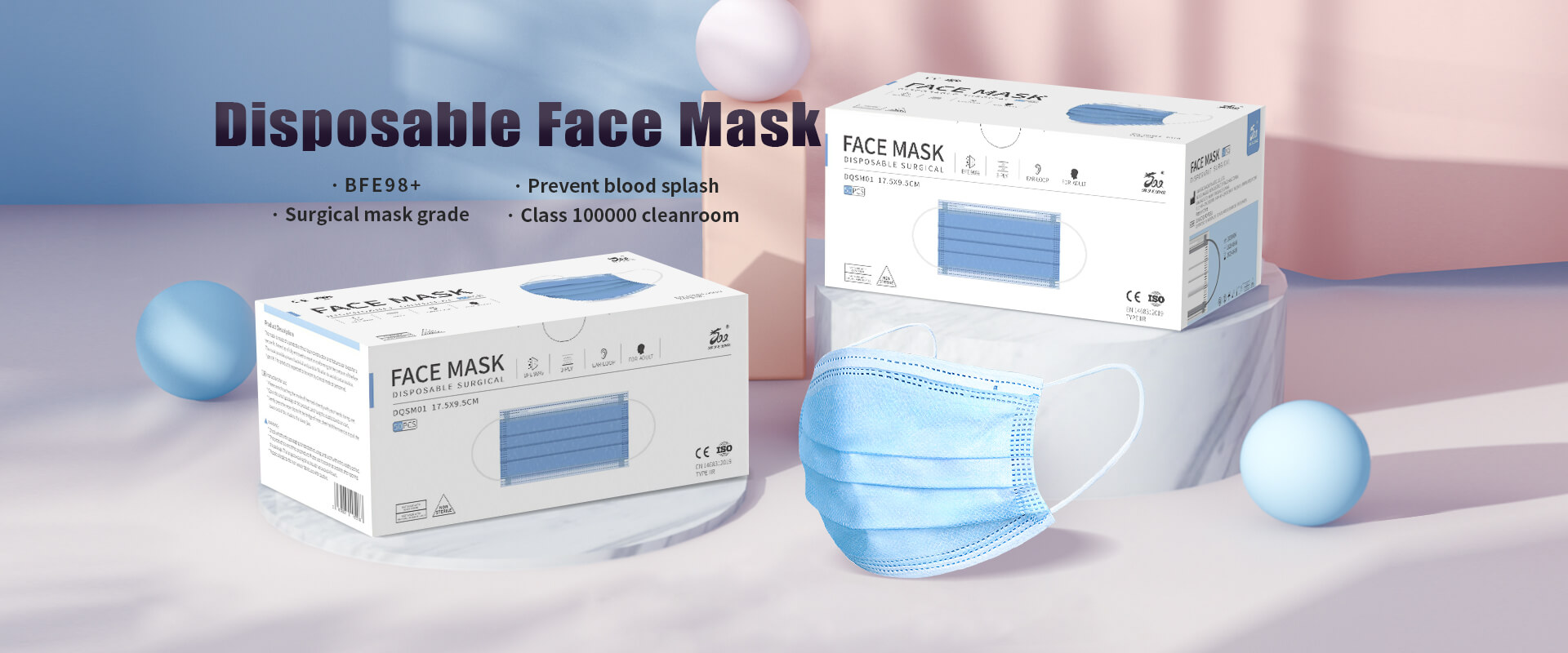
If you’re importing medical masks from China, you’re not alone. Thousands of importers do it every year. But here’s the hard truth: not all of them succeed.
Some get their containers stuck at customs. Some receive masks that don’t meet their country’s standards. Some even lose their entire investment because they didn’t do proper due diligence.
After 22 years in the nonwoven fabric export business from Xiantao, China’s nonwoven capital, We’ve seen it all. And today, we want to share the 3 critical things you must confirm before placing your first order — so you don’t become another cautionary tale.
- What Certification Does Your Country Require?
This is the #1 mistake I see importers make. They assume “CE certificate” is enough. But here’s the problem: CE is not one single standard.
- **European Union**: Requires EN 14683 certification, with Type I (BFE ≥ 95%) or Type IIR (BFE ≥ 98% + splash resistance) depending on your use case.
- **United States**: Requires FDA registration and ASTM F2100 Level 1/2/3 certification.
- **Brazil**: Requires ANVISA registration — and this is where many importers get trapped.
- **Japan**: Requires PMDA approval.
- **South Korea**: Requires KFDA certification.
Our advice: Before you even talk to a supplier, check with your local health authority or customs office to confirm exactly which certification your country accepts. Don’t rely on the supplier’s word — verify it yourself.
- What Is the Intended Use? Hospital or Civil?
This sounds obvious, but you’d be surprised how many importers mix this up.
- **Medical/Surgical Masks**: Must meet strict filtration and fluid resistance standards. Used in hospitals, clinics, and surgical settings.
- **Civil/Non-medical Masks**: Lower standards, for general public use. Cannot be marketed as “medical” or “surgical.”
If you’re selling to hospitals, you need medical-grade masks with proper certification. If you try to pass off civil masks as medical, you’re looking at fines, product recalls, and potentially criminal charges.
- Do You Need Sterile or Non-sterile Masks?
This is another detail that can make or break your import.
- **Sterile Masks**: Individually packaged, EO-sterilized, with a 14-day aeration period to ensure ethylene oxide residue is below 10μg/g. Required for surgical use.
- **Non-sterile Masks**: Not sterilized, for general medical or civil use. Lower cost, shorter lead time.
If your customer is a hospital doing surgeries, they need sterile masks. If you send them non-sterile ones, the entire batch will be rejected.
The Bottom Line
Importing medical masks is not rocket science, but it does require attention to detail. Before you place your order, make sure you’ve confirmed:
- **Certification**: Does your country accept the supplier’s certificate?
- **Use case**: Are you buying medical-grade or civil-grade?
- **Sterility**: Do you need sterile or non-sterile?
Get these three right, and you’re already ahead of 80% of importers.
Need help verifying your supplier’s certification or understanding your country’s import requirements? Feel free to reach out — We are happy to share what we’ve learned over the past decade.
Xiantao Daoqi Plastic Co.,Ltd.
Email: daoqi@daoqicorp.com
Tel: +86 0728-2620008